
Think Beyond Snacks: Some of the Best Vending Opportunities Aren’t Food at All
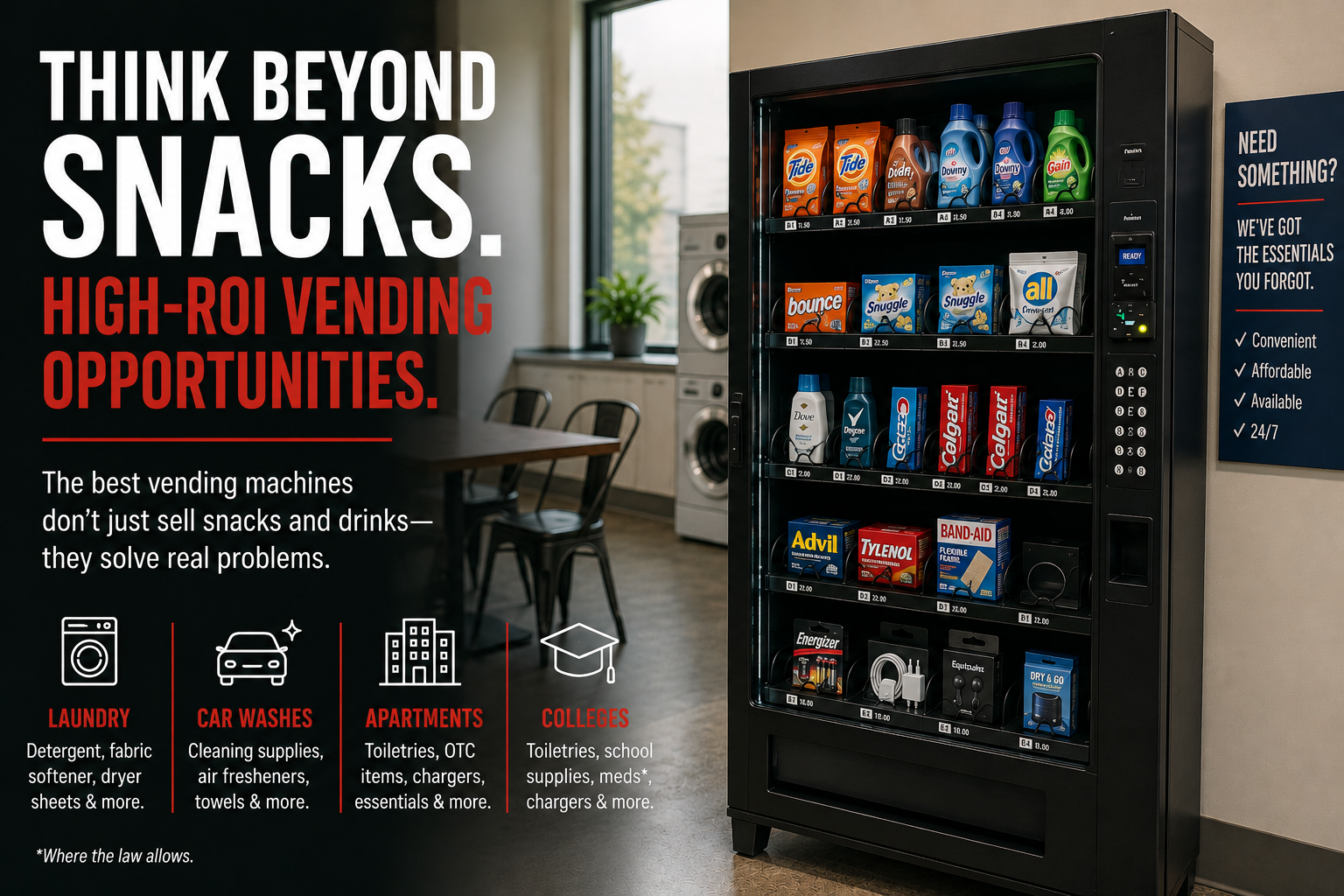
When most people picture a vending machine, they picture chips, candy and cold drinks.
For vending operators, that can be a pretty limiting way to look at the business.
Some of the most interesting vending opportunities aren't built around hunger or thirst at all. They're built around convenience, urgency and location. Someone forgot detergent after they've already loaded the washing machine. A college student realizes at 11 p.m. that they're out of toothpaste. Someone finishes washing their car and needs a microfiber towel or interior wipe. An apartment resident needs a phone charger and doesn't want to drive to a store.
That's when a vending machine becomes more than a place to grab a snack. It becomes the closest store.
And that can create a very different kind of vending opportunity.
The Opportunity Is the Problem You Can Solve
A good snack location needs traffic. A great specialty vending location needs something more specific: people who regularly encounter the same need in the same place.
That's an important distinction.
The U.S. convenience-services industry now generates more than $40 billion in annual economic impact, and NAMA's latest industry research specifically points to the continued evolution of self-service retail. The larger trend is clear: consumers have become increasingly comfortable buying what they need through unattended retail.
For operators, that means the opportunity doesn't necessarily begin with, "Where could I put a vending machine?" A better question may be: What do people routinely need here that isn't conveniently available? Find a strong answer to that question, and you've potentially found a vending location.
Laundromats: Sell the Thing They Came There to Use
Laundry vending may be the easiest example of this concept.
Someone can walk past a snack machine without buying anything. It's a little harder to ignore the fact that you've brought a load of dirty clothes to the laundromat and forgotten your detergent. Single-use detergent, fabric softener, dryer sheets, stain-removal products and laundry bags can all solve an immediate problem without requiring an employee behind a counter. Industry data supports the model. Laundromat-focused vending research consistently identifies detergent as the highest-volume laundry-vending category, followed by products such as fabric softener and dryer sheets. Laundry vending also has two characteristics operators should love: the products generally have long shelf lives and the purchase is directly connected to what the customer is already there to do. The same concept can work in apartment and college laundry rooms. You're putting the product exactly where someone discovers they need it.
That's a very different sales environment from hoping someone feels like a candy bar.
Car Washes: Don't Just Sell the Wash
Car washes create another interesting opportunity because the customer's purchase doesn't necessarily end when the wash does. Once the outside of the car is clean, what might they want next? Microfiber towels, interior cleaning wipes, glass wipes, air fresheners, tire-shine applicators, detailing cloths and other small car-care products can turn a vending machine into a miniature detailing-supply station. Again, context is doing much of the selling. A driver may have three bottles of glass cleaner sitting in the garage at home. That doesn't help when they're standing beside the vacuum at the car wash and notice fingerprints all over the inside of the windshield. That immediate convenience can support a completely different product and pricing strategy than traditional snack vending. Specialty car-wash vending can perform well when the location has enough traffic and the product mix matches what customers naturally need before they leave the property.
Apartments & Condos: Build a Tiny Convenience Store
Multifamily properties may offer some of the most creative opportunities for non-food vending.
Instead of another machine filled exclusively with soda and chips, imagine a well-stocked convenience machine near the mailroom, clubhouse or laundry facility. Laundry pods. Dryer sheets. Toothpaste. Toothbrushes. Deodorant. Feminine-care products. Phone charging cables. Batteries. Small first-aid products. Umbrellas. Pet-waste bags. Maybe even a few household basics that residents routinely run out of at the worst possible time. The right product mix depends on the property, but the strategy stays the same: stock the things someone would otherwise have to leave the property to buy. For the apartment or condo community, that machine also becomes an amenity. The property isn't simply giving up a few square feet of floor space for vending. It's giving residents 24/7 access to useful everyday products without adding staff or operating a store.
That's a much stronger value proposition when you're pitching the location.
College Campuses: Think 24-Hour Convenience
College campuses take this concept even further. Students live, study, work out, socialize and sometimes spend nearly their entire day on campus. Their schedules don't always line up with bookstore, pharmacy or convenience-store hours.
Some universities are already using vending to fill that gap. California State University San Marcos, for example, installed wellness vending machines carrying toiletries, self-care products, laundry detergent, COVID tests and over-the-counter medications, with machines located near academic buildings and inside residence halls. That's the kind of placement operators should study. Residence halls could support toiletries, laundry supplies, feminine-care products and chargers. Libraries could be a fit for charging cables, earbuds, pens, highlighters and other study essentials. Recreation centers might support personal-care items alongside traditional hydration and nutrition products.
The machine doesn't have to replace the campus store. It only has to be the most convenient option at the moment someone needs something.
Hotels, Campgrounds and Travel Locations Have the Same Problem
The same thinking opens up possibilities in places where people are away from home. Hotel guests forget toothbrushes, razors, deodorant, chargers and other personal items. Campground guests discover they forgot batteries, bug spray or basic supplies. Travelers need chargers, headphones and personal-care products at inconvenient hours. These aren't necessarily everyday purchases. That's exactly why vending can work. You're not competing for someone's regular shopping trip. You're solving an immediate problem in a place where the alternatives may involve getting in the car, leaving the property or waiting until morning.
Even the Product Margin Isn't the Whole Story
It's tempting to evaluate specialty vending by looking only at the markup on an individual item.
We'd look at the bigger picture. A product with an attractive gross margin isn't attractive if it rarely sells. A lower-margin product that turns constantly may deserve more space. Specialty products can also reduce some of the headaches associated with traditional food vending because many non-food items have longer shelf lives and aren't vulnerable to melting, staleness or expiration at the same pace as food. That doesn't mean every specialty machine automatically produces a better return. The ROI still comes down to product, placement, machine cost and turnover. The goal is to find products with a compelling combination of healthy margin, low spoilage, manageable restocking and a location where the need happens naturally.
Cashless Payment Matters Even More When the Ticket Gets Bigger
A $1.50 snack and a $12 phone charger aren't the same transaction.
As operators move into higher-priced convenience products, making payment easy becomes increasingly important. Modern vending technology supports credit and debit cards, mobile wallets and other cashless payment options, allowing operators to sell products far beyond the traditional pocket-change vending model.
That opens up the product mix considerably.
If the machine and payment system can support the transaction, operators can begin thinking in terms of unattended retail, not simply vending.
A Word About OTC Medications
Over-the-counter medication is an interesting category, particularly for college campuses, hotels and multifamily communities, but operators need to do their homework before stocking it.
Federal law does not categorically prohibit OTC drugs from being sold through vending machines, according to FDA guidance. However, the products must comply with applicable labeling requirements, and customers need an opportunity to view the required information before purchasing. State and local rules may add additional requirements, so operators should verify the regulations that apply where the machine will be located before offering medication.
In other words, aspirin may be a great convenience item. It isn't something we'd recommend throwing into an empty spiral without first checking the rules.
Don't Buy the Machine First
This may be the most important advice in the entire article. Find the problem before you buy the equipment. It's easy to see a cool specialty vending machine online and start imagining where you could put it. Work backward instead. Visit the location. Watch how people use the space. Talk to the owner. Find out what customers ask for. Look at what's nearby—and what isn't. At a laundromat, ask what customers regularly forget. At a car wash, watch what people bring with them to the vacuums. At an apartment community, ask management what residents routinely request from the office. At a college, think about what students need after the bookstore closes. Once you understand the demand, then choose a machine capable of vending those products reliably.
The Best Vending Locations Create Their Own Demand
There's a reason vending works so well in the first place: convenience has value. The operators who recognize that aren't limited to deciding whether Slot A7 should hold Doritos or Takis. They're looking at a location and asking what else people would happily pay to have available right there, right when they need it. Laundry supplies at a laundromat. Car-care products at a car wash. Toiletries in an apartment building. Chargers in a college library. Everyday essentials in a residence hall. The possibilities get much bigger once you stop thinking of the machine as a snack machine and start thinking of it as 24/7 retail space with a very small footprint. That's where some of the most interesting opportunities in vending may be hiding.
Have an Idea for a Specialty Vending Location?
Georgia's Vending Repair Center works with vending operators at every stage of the business—from choosing equipment and installing machines to repairs, preventative maintenance and professional refurbishing.
If you've identified an unconventional location or product opportunity but aren't sure what type of machine would work, talk to us before you buy. We can help you think through the equipment, product dimensions, payment system and service considerations so you're choosing a machine that fits the opportunity instead of trying to force the opportunity into the wrong machine.
Our refurbished inventory changes regularly, too, so contact us to see what's currently available and what machines may be a good fit for your next location.