
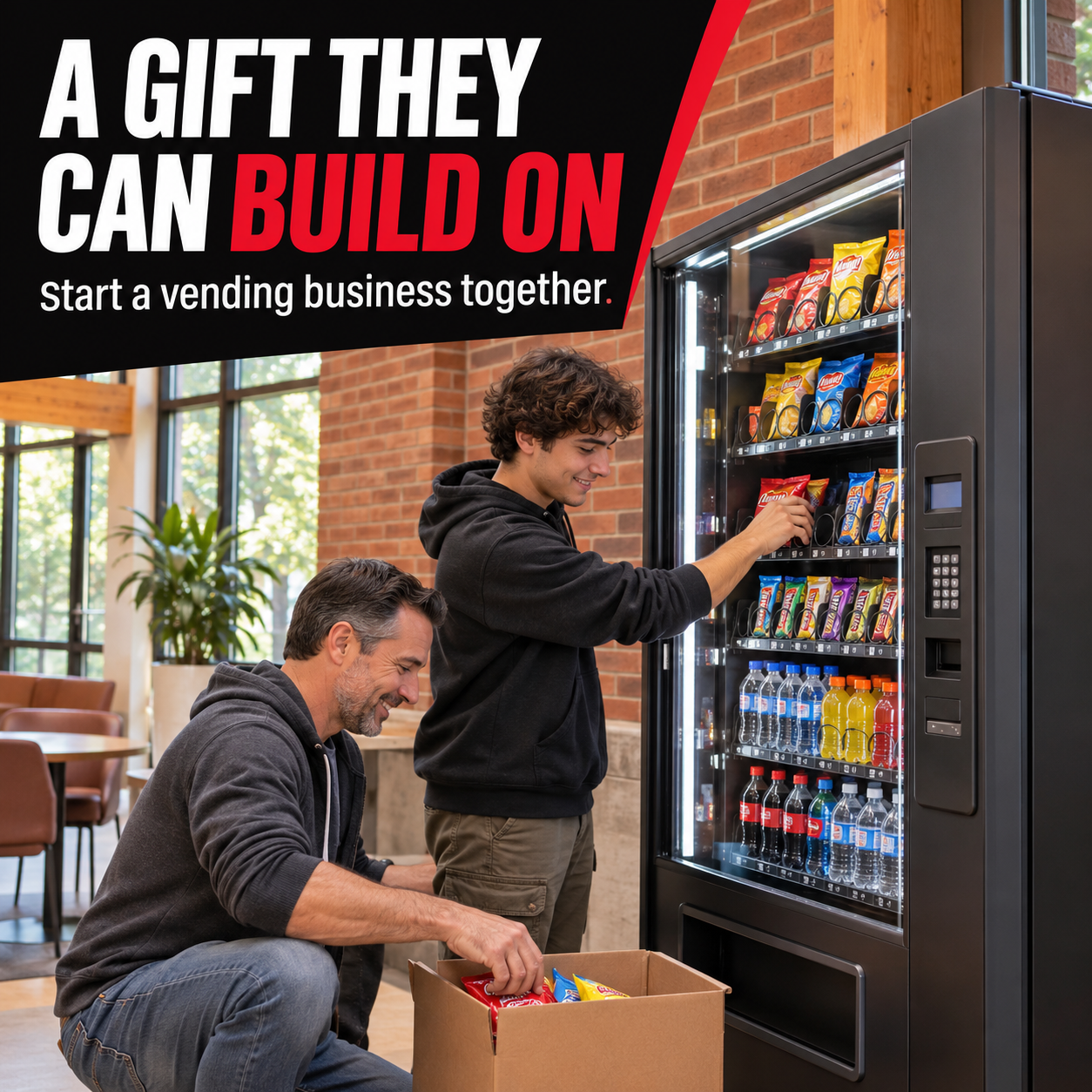
Some gifts are exciting for a few weeks, then end up in a closet. Starting a small business together can give a teen or young adult something different: a real responsibility, a chance to learn by doing, and a project you can keep working on side by side.
A vending machine can be the starting point, but the bigger gift is everything that comes with it. Finding a location, learning what people want to buy, keeping track of money, stocking products, and showing up when the machine needs attention are all part of running a business. Those lessons don’t arrive in a box, and they’re useful long after the first machine is in place.
This isn’t a promise of easy or guaranteed income. Vending takes planning, regular work, and patience. It can, though, give a young person a practical way to learn how a business operates—with a parent or guardian close by to offer guidance.
A business you can build together
A first vending business gives a young person a chance to see how everyday decisions affect a real operation. They can research potential locations, compare products and prices, track what sells, and decide when it’s time to restock. Over time, they learn to take responsibility for the results instead of simply receiving a finished project.
It also gives parents a natural way to teach skills that can be hard to learn from a lecture: how to follow through, communicate professionally, budget for expenses, solve problems, and make decisions with incomplete information. The parent’s role can shift as the young owner gains confidence—starting with more hands-on help, then letting them take the lead on more of the work.
The goal doesn’t need to be a large route or a fast return. One thoughtfully chosen location can give a young operator plenty to learn. The business can grow if the first steps make sense and the results support it.
Make the numbers manageable before you buy
Vending machines come in different styles, conditions, and price ranges. Financing may help spread the cost of equipment over time, and refurbished machines can offer another way to consider a lower upfront investment. Ask GVRC what options are available and what the terms and approval requirements look like before choosing a machine.
The monthly payment is only one part of the startup budget. Include initial inventory, delivery and setup, payment technology, product costs, location commissions if applicable, fuel, maintenance, and other operating expenses. A machine needs to sell enough to cover the full cost of running it—not just its loan payment.
Start with a budget you can explain together. Look at what sales the location might support, what the business will spend each month, and how much working cash it needs to keep products on the shelves. If the numbers feel tight before the business begins, adjust the plan before taking on the expense. That’s a valuable business lesson in itself.
Find the location before choosing the machine
It can be tempting to pick out a machine first. A better first move is to look for a location where vending could solve a real convenience problem. Think about places where people spend time and have limited access to snacks, drinks, or other everyday options.
Your teen can make a list of possible locations and research who uses each one, when they’re there, and what nearby alternatives exist. Then they can practice introducing the idea to a property manager or business owner. A useful conversation covers more than “Would you like a vending machine?” It should address who will use it, what products might fit, who will keep it stocked, and how service issues will be handled.
Get the location’s approval and expectations in writing before moving forward. If a parent is helping a minor start the business, the parent or guardian should guide the legal and financial arrangements and check what local requirements apply. Agreements, insurance, business accounts, taxes, and permits can all involve rules that vary by location.
Once the location is clear, it’s easier to choose equipment that fits the space and the people who will use it. A machine should match the opportunity—not the other way around.
Let the young operator lead the product research
The right product mix depends on the location. A school, apartment community, workplace, gym, and recreation center can all have different customers and buying patterns. Instead of guessing, have your teen ask what people want, look at what’s already available nearby, and consider when the machine is most likely to be used.
Start with a manageable selection and keep notes. Which products sell first? Which ones are still sitting there at the next visit? Are people asking for something that isn’t stocked? That information can guide the next order more effectively than filling every slot with a personal favorite.
This is a good place for a parent to ask questions rather than make every decision: “What did the sales tell you?” “What would you change next time?” The young operator gets practice connecting choices to results and learns that a product mix is something to review, not set once and forget.
Make stocking and restocking part of the responsibility
A full machine on launch day is only the beginning. Someone has to check inventory, shop for products, rotate stock, clean the machine, confirm that it’s working, and respond when a selection sells out or a customer reports a problem.
Create a regular service routine and decide who is responsible for each task. The young operator can keep a restocking checklist, record what was added, and review sales before making the next order. Parents can supervise and help with transportation or lifting, while gradually giving the teen more ownership of the schedule and decisions.
Keep simple records from the start. Track sales, inventory purchases, machine expenses, fees, commissions, and other costs. Reviewing the numbers together makes it easier to see whether the business is covering its expenses and where it could improve. It also builds good habits before the route grows more complicated.
Keep the first step small enough to learn from
A first vending business does not have to become a family empire. It can begin with one location, one machine, and a clear plan for who will do the work. Give the young owner room to make choices, but make sure the responsibilities are specific: check the machine on schedule, keep accurate records, follow the budget, and communicate with the location.
As the operation settles in, review what is working and what needs to change. If the location is performing well and the young operator is managing the routine, you can explore whether another machine or placement makes sense. Growth should follow what the business has learned—not pressure to expand quickly.
For a step-by-step look at what happens after buying a machine, read GVRC’s guide, “I Bought a Vending Machine. Now What? A Real-World Guide for New Vending Operators.”
A gift that can grow with them
Starting a vending business together won’t replace every other gift, and it won’t make the work disappear. It can give a teen or young adult something more lasting than another item to unwrap: the chance to build a real business, learn how to care for it, and share the experience with someone who’s there to help.
If you’re considering this for your family, GVRC can help you talk through machine options, including refurbished equipment and available financing. Start with a conversation about the budget, the location, and how much responsibility your young operator is ready to take on.